
Demonstrations in several US cities have followed the recent conflict with Iran, with activist groups criticising Donald Trump and his administration’s actions. US Defence Secretary Pete Hegseth described the military campaign as a “historic and decisive victory”. However, protests in Washington, DC and elsewhere suggest continuing opposition among some groups.
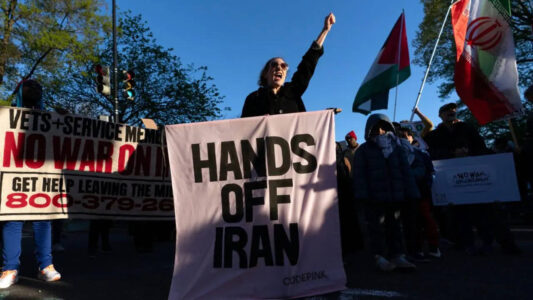
In the US capital on Tuesday evening, activists gathered near the White House, bringing megaphones, pre-printed signs and materials for demonstrations. Some painted their hands red and chanted slogans condemning what they described as “Trump’s war on Iran”. Groups involved included Party for Socialism and Liberation, which published a statement titled: “Why Trump failed in his criminal war against Iran – and why we need to keep up the pressure.”
By the following day, its Atlanta chapter had called for a “National Day of Action”, urging supporters to “KEEP THE PRESSURE UP!” and describing the administration as having been “compelled to temporarily step back from its genocidal threats”. At the protests, activists from several organisations voiced opposition to US and Israeli policies.
Members of CodePink and other groups were seen distributing signs reading “STOP THE WAR ON IRAN!” while chants included “Free, free Palestine!” and “Zionism will fall, brick by brick, wall by wall”. Olivia DiNucci, a Washington-based organiser, was among those leading chants, while Medea Benjamin joined demonstrators.
Another protester, Nadine Seiler, described such demonstrations as performative, saying: “It is political theater… and we need more of it!”
The protests involved a range of organisations, including the Palestinian Youth Movement and other groups advocating on Middle East issues. Some of these organisations have been linked in reports to a broader network associated with Neville Roy Singham, a US-born businessman based in China who has funded activist and media projects.
Experts cited in reports have described such coordinated protests and messaging as part of what is sometimes called “cognitive warfare”, where narratives, imagery and public demonstrations are used to influence opinion.
Critics argue that some groups involved promote views aligned with US adversaries, including Iran and China. Supporters of the protests, however, describe them as expressions of opposition to US foreign policy.
US authorities, including the Justice Department and congressional committees, are reported to be examining whether some organisations may have links to foreign funding that would require registration under US law. No conclusions have been publicly confirmed.
Further protests have been planned in cities including Chicago and Orlando, with organisers calling for “rapid response mass mobilisations”. Despite the announcement of a ceasefire, some activist groups have indicated they intend to continue demonstrations, arguing that broader political issues remain unresolved.