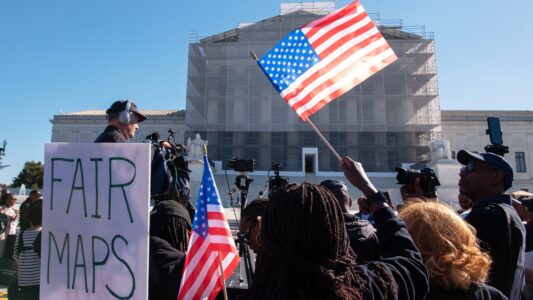

The Supreme Court of the United States on Wednesday struck down Louisiana’s congressional map, ruling that the state unconstitutionally created a second majority-Black House district. The decision marks a significant development in how courts interpret Section 2 of the Voting Rights Act of 1965, which prohibits voting practices that discriminate on the basis of race. While the court stopped short of declaring the provision unconstitutional, it set a higher bar for future challenges.
Writing for the majority, Justice Samuel Alito said Section 2 “imposes liability only when the evidence supports a strong inference that the State intentionally drew its districts to afford minority voters less opportunity because of their race.”
The ruling, opposed by the court’s three liberal justices, is expected to have wide-ranging consequences for elections and redistricting battles across the United States.
Here are five key ways the decision could reshape future elections:
1. Section 2 Lawsuits Become Harder to Win
The court did not invalidate Section 2 but redefined how it applies. Plaintiffs challenging electoral maps must now meet stricter requirements. Alternative maps used as evidence can no longer rely on race as a primary factor. They must also satisfy traditional redistricting criteria and align with a state’s legitimate political objectives.
In addition, challengers must account for party affiliation when attempting to demonstrate racially polarised voting.
In dissent, Justice Elena Kagan warned the ruling was “far-reaching”, writing that “today’s decision renders Section 2 all but a dead letter.”
2. States Gain More Leeway to Cite Politics
The court emphasised that states retain the authority to draw districts based on non-racial considerations, including partisan advantage.
It reaffirmed its earlier stance that claims of partisan gerrymandering fall outside the remit of federal courts, effectively allowing states to defend contested maps on political grounds.
This creates a new legal dynamic: states may argue their maps are driven by party strategy rather than race, even where the two overlap.
Under the new framework, challengers must disentangle political motives from racial ones — a task likely to prove difficult in many cases.
3. Minority-Opportunity Districts Face Uncertainty
The ruling could place some districts designed to enhance minority representation at risk, particularly in states where such districts tend to favour Democrats.
While not all are immediately affected, legal experts say some may now be vulnerable if states can plausibly argue that political considerations — rather than race — shaped their boundaries.
The court found that Louisiana’s second majority-minority district was not required under federal law and that no compelling justification existed for its creation.
Justice Kagan, in dissent, argued that such districts may now exist “only on sufferance, and probably not for long.”
4. Mid-Decade Redistricting May Accelerate
The decision comes amid an increase in redistricting outside the traditional 10-year cycle.
According to the National Conference of State Legislatures, several states — including California, Missouri, North Carolina, Ohio, Texas, Utah and Virginia — have already adopted new maps since 2025.
The ruling may encourage more states to revisit their boundaries, particularly if they believe courts will give greater weight to political justifications.
5. Control of the House May Hinge on Map Battles
With the US House of Representatives closely divided, even small changes in district boundaries could have significant political consequences.
Analysts say the decision is likely to intensify legal and political fights over redistricting, shifting attention from traditional campaigning to courtroom challenges and legislative manoeuvres.
As states move to redraw maps, the balance of power in Congress may increasingly depend not just on voters, but on how electoral boundaries are defined.