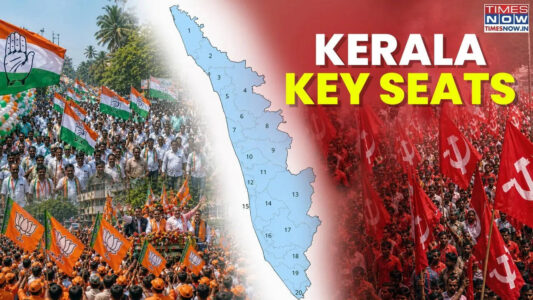

As counting day dawns on Monday, May 4, Kerala stands at a crossroads. The southern state, which is known for its sharply bipolar contests, will deliver its verdict alongside Tamil Nadu, Assam, West Bengal and Puducherry. At stake in Kerala is not just power or who will form the government, but political legacy – how key leaders and parties would be remembered in the long-run.
For incumbent Pinarayi Vijayan and the LDF (Left Democratic Front), a win could cement his place in history as the leader who broke Kerala’s decades-old pattern of alternating governments. For the Congress-led UDF and leaders like Ramesh Chennithala or VD Satheesan, the result would shape how they are seen – as leaders who revived the party or failed to capitalise on an opportunity. For the BJP, even small gains could define its narrative in Kerala – whether it’s finally seen as a serious player or still remains on the margins.
Across Kerala, several high-profile constituencies are under the spotlight, cutting across regions from Thiruvananthapuram in the south to Thrissur and beyond. These are not just battleground seats, but symbolic of the larger political story unfolding across the state.
Below is a sharper, seat-by-seat look at the key candidates and the traditional voting pattern in the constituencies that are drawing the most attention across Kerala:
Key Constituencies To Watch In Kerala
Dharmadam:
Chief Minister Pinarayi Vijayan’s constituency remains one of the most closely watched. A victory margin here will be seen as a referendum on his governance.
Key candidate/s: Pinarayi Vijayan (CPM)
Main rival/s: Abdul Rasheed (Congress), K Ranjith (BJP)
Traditional voting pattern: A Left stronghold. Kannur district has historically backed the CPM, and Dharmadam has consistently voted LDF.
Nemom:
Once considered the BJP’s gateway to Kerala, Nemom has seen intense triangular contests. The party’s performance here will be closely tracked.
Key candidate/s: Rajeev Chandrasekhar (BJP) BJP
Main rivals: V Sivankutty (CPM), KS Sabarinadhan (Congress)
Voting trend: Traditionally mixed, but gained prominence as BJP’s first breakthrough seat (2016). Since then, it has seen tight triangular fights.
Thiruvananthapuram:
A politically significant urban seat, often reflecting the mood of the capital. Congress MP Shashi Tharoor’s influence in the region adds weight to this contest.
Key candidate/s: Sudheer Karamana (IND – LDF)
Rival/s: K Jayan (BJP), CP John (CMP Kerala – UDF)
Voting trend: Urban swing seat, alternating between UDF and LDF, with BJP increasingly competitive.
Paravur:
Opposition Leader VD Satheesan’s seat is crucial for the UDF’s morale and leadership standing.
Paravur (Ernakulam)
Key candidate/s: VD Satheesan (Congress – UDF)
Rival/s: ES Purushothaman (BJP), ET Taison Master (CPI)
Voting trend: Leans UDF, though not entirely safe; Satheesan has built a strong personal base.
Haripad:
Veteran Congress leader Ramesh Chennithala’s constituency—his performance could shape the Congress narrative in the state.
Key candidate/s: Ramesh Chennithala (UDF)
Rival/s: Sandheep Vaachaspathi (BJP), TT Jismon (CPI)
Voting trend: Congress/UDF-leaning, with Chennithala’s personal influence making it a relatively stable seat for the party.
Mattannur:
Former Health Minister KK Shailaja, widely recognised for her handling of COVID-19, is a key LDF face here.
Key candidate/s: KK Shailaja (LDF – CPM)
Rival/s: Biju Elakkuzhi (BJP), Chandran Thillankeri (Congress)
Voting trend: Strong Left bastion, part of the CPM-dominated Kannur belt.
Vadakara:
KK Rema’s contest continues to draw attention due to its emotional and political undertones. Rema is the widow of Revolutionary Marxist Party founder late TP Chandrasekharan.
Key candidate/s: KK Rema (UDF-backed)
Rival/s: Adv K Dileep (BJP), MK Bhaskaran (LDF)
Voting trend: Historically Left-leaning, but turned into a highly emotional and competitive seat after Rema’s entry; now a swing seat.
Manjeshwaram:
BJP’s K Surendran has repeatedly contested from here; this seat remains critical for the party’s ambitions.
Key candidate/s: K Surendran (NDA)
Rival/s: KR Jayananda (CPM), AKM Ashram (IUML)
Voting trend: Knife-edge contests. Traditionally UDF vs BJP here, with very narrow victory margins in past elections.
Thrissur:
A prestige battle with high-profile campaigning, seen as a litmus test for BJP’s growth and UDF’s resilience.
Key candidate/s: Padmaja Venugopal (BJP)
Rival/s: A Leelakrishnan (CPI), RJ Pallan (Congress)
High-profile BJP face in recent contests: Suresh Gopi
Voting trend: Swing constituency. Has alternated between UDF and LDF; BJP has been trying to convert strong vote share into a win.
Palakkad:
Another constituency where the BJP has previously shown strength, making it a key battleground.
Key candidate/s: Ramesh Pisharody (Congress)
Rival/s: Sobha Surendran (BJP), NMR Razak (IND – LDF)
BJP figure linked to seat: E Sreedharan (previous election)
Voting trend: Highly competitive swing seat, one of BJP’s strongest prospects in the state.
Kozhikode:
Urban seats where voter sentiment often reflects broader ideological shifts.
Kozhikode North
Key candidate/s: T Ravindran (CPM)
Rival/s: Navya Haridas (BJP), Adv K Jayanth (Congress)
Voting trend: Left-leaning urban seat, but with pockets of Congress strength.
Kozhikode South
Key candidate/s: Adv Fayzal Babu (IUML – UDF)
Rival/s: T Raneesh (BJP), A Devarkovil (Indian National League)
Voting trend: Competitive, often tilting UDF due to IUML influence, but not a safe seat.
Wayanad:
LoP Rahul Gandhi is Congress MP from Wayanad. His presence continues to influence voter sentiment in the region, indirectly impacting nearby seats.
Key candidate/s: K Surendran (BJP)
Rival/s: Sebastian Wayanad (IND), KP Sathyan (IND)
Voting trend: Strong UDF influence, boosted by Rahul Gandhi’s presence in the Lok Sabha seat, though LDF has pockets of strength.
Big Picture
North Kerala (Kannur, Kozhikode): Traditionally Left-dominated, but with emerging cracks in select seats.
Central Kerala (Thrissur, Ernakulam): True battleground, decides overall outcome.
South Kerala (Thiruvananthapuram belt): Triangular contests, BJP more relevant here.
In short, while Kerala has a clear LDF–UDF bipolarity, many of these high-profile seats have evolved into micro-battles shaped by candidate strength, local issues, and shifting voter loyalties—which is why they will be decisive when the results start coming in on May 4.
Kerala Assembly Elections
Kerala voted in a single phase, maintaining its tradition of high voter turnout and orderly polling. The elections saw intense campaigning, with issues ranging from governance and welfare schemes to allegations of corruption and economic management dominating the discourse. The LDF highlighted its administrative track record, especially in health and social welfare, while the UDF focused on anti-incumbency and governance lapses. The BJP attempted to inject a third dimension into the contest, banking on central schemes and leadership visibility.
What Exit Polls Said
Exit polls have largely indicated a tight contest, though several suggest an edge for the Congress-led UDF. Projections from multiple agencies hint at a possible shift in voter sentiment, with the UDF potentially crossing the majority mark, while the LDF may see a dip from its previous tally. The NDA is expected to make marginal gains but not a breakthrough. However, Kerala has often defied predictions, and exit polls in the state have had a mixed record.
The Stakes
For Pinarayi Vijayan and the LDF, a win would be historic—breaking a decades-old pattern and reinforcing the Left’s governance model. For the Congress and the UDF, it is about reclaiming lost ground and reasserting political relevance ahead of national battles. For the BJP, even incremental gains could signal long-term potential in a state that has remained elusive.
As counting begins Monday, Kerala’s verdict will not just decide who governs the state, but also send a powerful message about the evolving mood of its electorate.