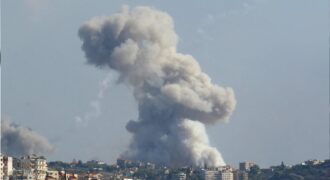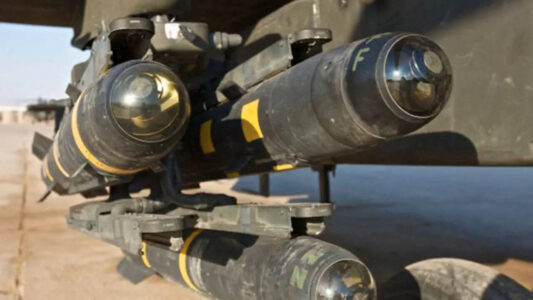

The United States military on Friday fired a Hellfire missile into the engine room of a commercial vessel in the Gulf of Oman. For many people, the weapon’s name is familiar but its details are not. Before we take a closer look at what it is and how it works, let’s understand what exactly happened on Friday.
US Central Command posted a statement on Friday saying its forces had disabled a Gambia-flagged vessel called the Lian Star after it attempted to sail toward an Iranian port. According to CENTCOM, the ship was issued more than 20 warnings before a US aircraft fired a Hellfire missile into its engine room. After the strike, the vessel stopped heading toward Iran.
It was not an isolated incident. CENTCOM said US forces have now disabled five commercial vessels and redirected 116 others as part of an effort to enforce a blockade on Iran, which remains in place even as a ceasefire between the two countries holds.
A Weapon With a Long History
The Hellfire was not built with ships in mind. When it was first developed in the 1970s, its entire purpose was to give military helicopters a reliable way to destroy enemy tanks from the air. Over time it grew into something considerably more versatile, finding a role in urban warfare, high-value targeting and now, apparently, maritime enforcement.
READ MORE: Iran Strike on Kuwait Injures Americans, Hits Reaper Drones Amid Peace Deal Deadlock
The missile weighs around 100 pounds and can strike targets up to nearly seven miles away. It has long been associated with the AH-64 Apache attack helicopter, though it is also a standard weapon on the MQ-9 Reaper drone, one of the most widely used unmanned platforms in the US military today.
How Does It Actually Hit Its Target?
The standard version of the Hellfire uses laser guidance. A laser is pointed at the intended target, either from the aircraft itself or by a team on the ground, and the missile follows the beam in. Some variants work differently, using millimeter-wave radar to guide themselves without needing a laser at all, which makes them effective even when smoke or thick cloud cover would otherwise cause problems.
Why Use a Hellfire on a Ship?
Targeting the engine room tells you a lot about what the military was trying to do here. The goal was never to sink the Lian Star or put its crew in danger. Knocking out the engines left the ship dead in the water without turning the situation into something far messier. That kind of surgical approach is exactly what has made the Hellfire a go-to option for situations where collateral damage is something commanders actively want to avoid.