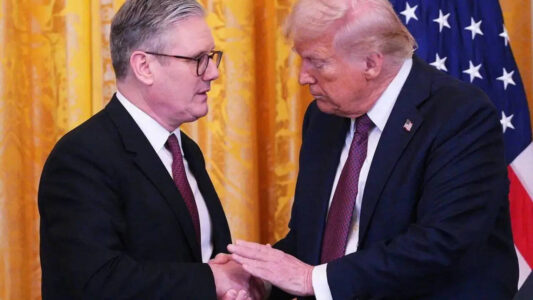

Britain is now involved in the conflict with Iran, not through its own strikes, but by opening two of its military bases to American forces targeting Iranian missile sites. In a recorded statement on Sunday evening, Prime Minister Keir Starmer confirmed the decision, framing it as a defensive move rather than an act of aggression. Iran’s behaviour, he argued, had grown increasingly reckless and was actively putting British lives at risk. With 200,000 UK nationals living across Middle Eastern countries currently being targeted by Iranian missiles, he said standing on the sidelines was no longer a viable option.
“We have taken the decision to accept this request – to prevent Iran firing missiles across the region … killing innocent civilians … putting British lives at risk … and hitting countries that have not been involved,” Starmer said.
“The only way to stop the threat is to destroy the missiles at source, in their storage depots or the launchers used to fire them,” Starmer said. The US had formally requested permission to use the British bases for what Starmer described as a “specific and limited defensive purpose.” He said yes.
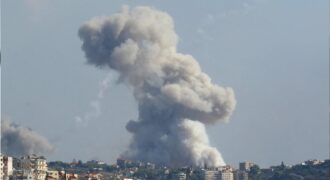
British jets, he added, were already in the air as part of coordinated defensive operations and had successfully intercepted Iranian strikes. Meanwhile, moments after Starmer announced his decision, reports of an Iranian strike on RAF base in Cyprus emerged.
The Backlash From His Own Side
The decision has landed like a grenade inside the Labour Party. Emily Thornberry, who chairs the foreign affairs committee and sits within Labour’s own ranks, has said the original US action against Iran was itself a breach of international law, a position that puts her directly at odds with her own prime minister’s decision to facilitate further strikes.
She is unlikely to be alone. The left of the Labour Party has long been deeply uncomfortable with British military involvement in the Middle East, and Starmer’s announcement will test the limits of party discipline in the days ahead.
Liberal Democrats: ‘Give Parliament a Vote’
The Liberal Democrats came out swinging almost immediately after Starmer’s statement. Party leader Ed Davey didn’t mince words about what he thought was really happening.
“No matter how the prime minister tries to redefine offensive as defensive, this is a slippery slope,” Davey said. “He must not let Trump drag Britain into another prolonged war in the Middle East.”
The Lib Dems are demanding that MPs get a formal say on whether American forces should be permitted to use British bases. Davey called on Starmer to come to parliament on Monday, lay out the full legal case, and put it to a vote, rather than making the decision unilaterally from Downing Street.
Pressure From the Right Too
Starmer isn’t facing pressure only from the left. Both the Conservatives and Reform UK had been calling on the government to offer stronger backing to President Trump, meaning Starmer was effectively being squeezed from both directions before Sunday’s announcement.
Whether this move satisfies the right while holding the left together is a political balancing act that will play out in the coming days, particularly if parliament is recalled and MPs get the debate the Liberal Democrats are demanding.