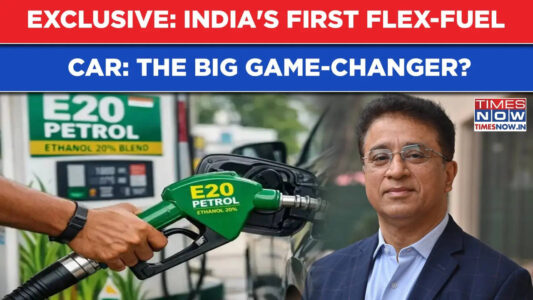

As the spotlight is on India’s mobility revolution with the launch of the first flex-fuel vehicle in focus by Maruti Suzuki, Timesnownews.com speaks to Deepak Balani, Director General, Indian Sugar and Bioenergy Manufacturers Association (ISMA)
Q. Will flex-fuel vehicles be the big game-changer for all stakeholders?
A. It’s actually a huge structural reform which we are going to see. This is something which we have been waiting for almost two to three years. ISMA has been very consistently talking to the Government based on the beautiful example which Brazil is following of flex-fuel vehicles. It’s a big move for everyone, including farmers, including sugar mills, the Government, oil marketing companies and the consumers. This specifically will be able to take any blend between E20 and E100. So after the launch of the vehicle, the Government will decide whether to have E85 or E100 fuel. Ultimately, we will need to have a complete infrastructure in place. So moving forward, we hope that this will catch the attention of the consumers because this is good for everyone, as I said, for all stakeholders.
Q. How will this move to flex fuel vehicles impact prices for consumers? How can they save by switching from petrol to more ethanol-based fuels?
A. Basically, E85 or E100 will have either 85 % of ethanol or 100 % ethanol. We all know that there will be a certain amount of efficiency loss but there is better compression ratio, so you will get more power in the engine.
But to compensate for the loss in efficiency, I believe the Government is also thinking of making fuel cheaper than the normal petrol, which is E20, which could be less approximately 10 to 15 percent less than the normal petrol, so it will definitely be much cheaper than existing fuel. Consumers will be compensated for a bit of efficiency loss. Moving forward, this is our own energy. This is our own produced fuel and we don’t have to really depend on the imported crude. This is good for, as I said, for the consumers and for the country as well.
Q. Do you see this implementation then significantly reducing India’s oil import bill?
A. We will have to have multiple things to reduce substantial amount of imports. I said this is one of the major reforms in the right direction. We all understand that this is only about the new vehicles which will come. So depends on the policy, how the Government basically wants to take it forward in terms of policy narrative because ultimately this is a modified IC engine, flex engine. The Government can make this optional and let consumers choose. Depending on what the Government decides, this will perhaps increase consumption. But having said that, we will have to move to other consumption uses as well. For example, ethanol cooking stoves, diesel blending, sustainable aviation fuel. There are multiple things which the Government is working on with the industry to ensure and utilise our production capacity of ethanol in the country and reduce our import bill of crude.
Q. What is the timeline of more flex fuel vehicles in the market and the pricing?
A. Bharat is launching its first flex wheel vehicle, last year during the Bharat Mobility Exhibition, almost 19 models of flex fuel vehicles were showcased. We will soon see more flex fuel vehicles being launched. So this will start taking shape very soon.