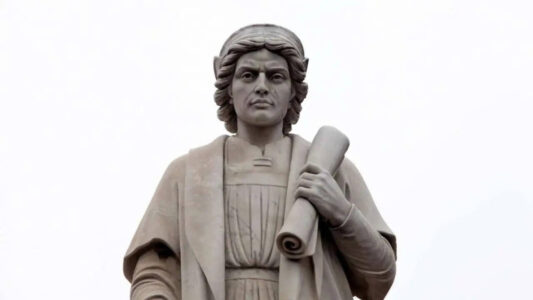

A statue of Christopher Columbus appeared on the grounds of the White House early Sunday morning, erected on the north side of the Eisenhower Executive Office Building, the building that houses White House staff offices, sitting directly next to the West Wing and facing Pennsylvania Avenue. The statue sits behind fencing.
The White House made no attempt to downplay the statement being made. “In this White House, Christopher Columbus is a hero, and President Trump will ensure he’s honored as such for generations to come,” spokesman Davis Ingle said in a statement.
Where This Particular Statue Came From
The statue is a replica of one that protesters tore down and threw into Baltimore’s Inner Harbor during the protests of the summer of 2020, protests that erupted in the wake of George Floyd’s murder. The marble pieces of the original were retrieved from the harbour, and a Maryland artist used them as the basis for creating the replica now standing on White House grounds.
The original Baltimore statue had been donated by an Italian American group and dedicated in 1984, with President Ronald Reagan speaking at the ceremony.
Why Columbus Statues Are Contested
The removal of Columbus statues, more than 30 were dismantled in a four-month span in 2020, sits at the intersection of two genuinely opposed positions that have deep historical roots.
Those who oppose honouring Columbus point to his documented role as a slave trader of Indigenous Taíno people, the brutal campaign of subjugation carried out by Spanish colonists in the wake of his voyages, and the decimation of Indigenous populations, through both violence, in the century and a half that followed.
On the other side, many Italian American groups have long viewed Columbus statues as symbols of ethnic pride, monuments to a Genoese explorer that became totems of identity for Italian immigrant communities who faced significant discrimination in the United States. Most of the statues were donated by those communities in the 19th and 20th centuries.
Trump’s Position
Donald Trump has been consistent and explicit in his framing of Columbus. In a proclamation last year, he called the explorer “the original American hero, a giant of Western civilization, and one of the most gallant and visionary men to ever walk the face of the earth.”
The decision to place the statue on White House grounds emerged from discussions within the administration about events surrounding this year’s 250th anniversary of American independence. Installing a Columbus replica, built from the marble of a statue that protesters had removed, on federal property next to the West Wing is a deliberate and pointed response to what happened in 2020.
Whether it settles anything about Columbus’s place in American public life is a different question entirely. It is unlikely to.